
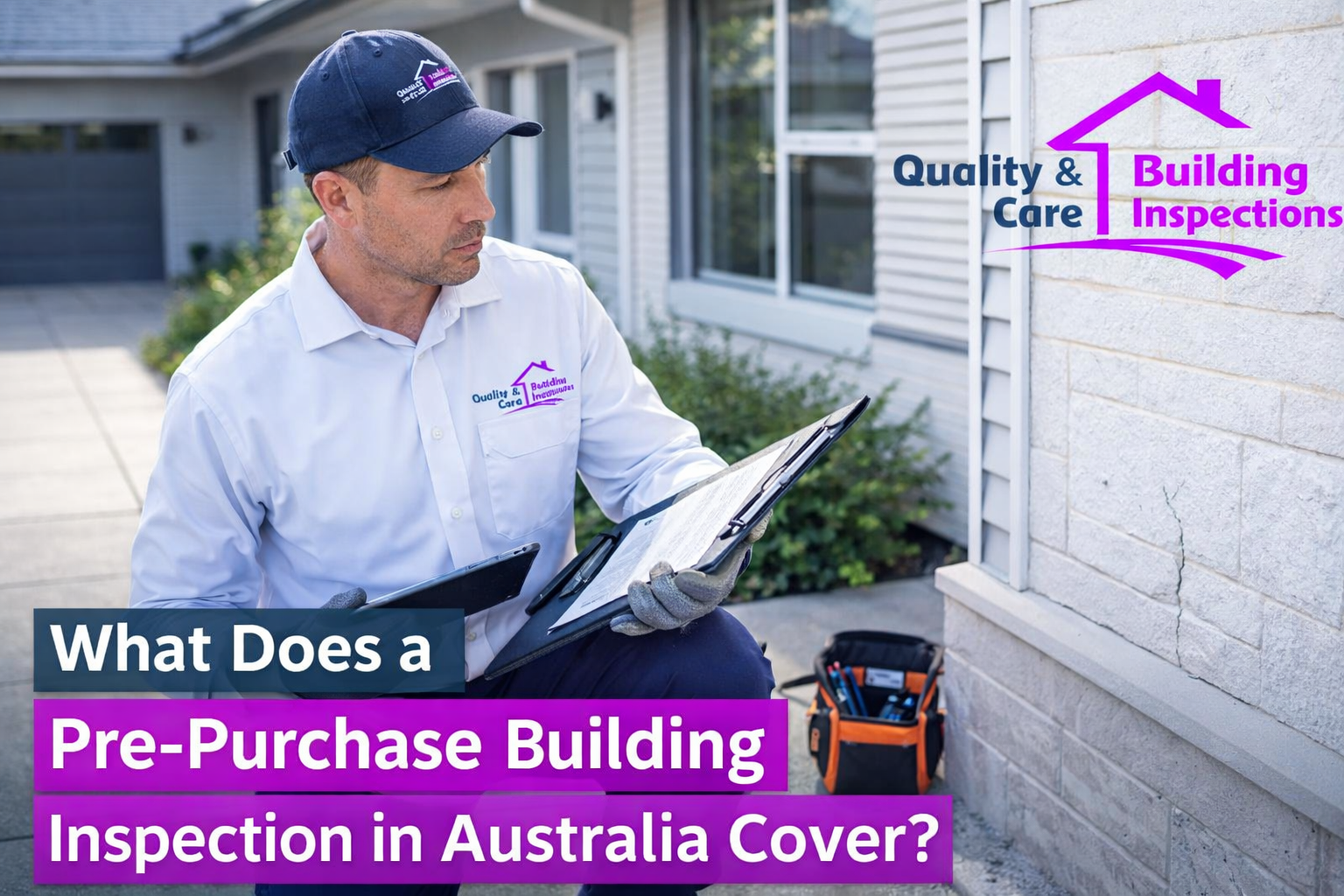
A pre-purchase building inspection in Australia is a critical step before committing to a property purchase. At Quality & Care Building Inspections, we help you understand exactly what you are buying by examining the visible and accessible condition of the building. Our inspections are aimed at detecting safety issues, construction flaws and maintenance risks that may impact on your decision or subsequent expenditure. When you book a pre-purchase building inspection with us, you are provided with a formatted inspection according to the Australian Standards and industry practice. Our mix of professional tools, knowledge building, and practical reporting gives you the ability to go on with confidence having well-known information and not assumptions.
We inspect to give a realistic picture of the condition of a property and not a superficial overview. We examine the structure, safety elements, and functional systems using a professional inspection methodology supported by a building inspection checklist before buying. We examine available spaces around the residence and indicate flaws that can affect the safety, structural integrity, or subsequent repair expenses. This will give you a practical insight that is in accordance with a responsible home buying guide, as opposed to a generic outline.
Our evaluation procedure is a systematic one so that all major building items are checked in terms of their safety, durability, and the long-run repair implication before you make any purchase.
We assess foundations, walls, floors, and roof framing to identify signs of movement, cracking, or material fatigue. This will assist you to know whether the property is indicative of long term occupation or of developing structural flaws that could affect its safety or marketability in the future.
We examine roofing materials, flashing, drainage systems, and external walls for wear, corrosion, and water entry points. This reduces the risk of unexpected repair expenses related to moisture intrusion or surface breakdown.
At Quality & Care Building Inspections, we evaluate visible service systems and interior elements to highlight safety concerns and early warning signs that could affect habitability, compliance, or future maintenance costs.
We visually inspect accessible wiring, switchboards, and plumbing fixtures for obvious hazards or outdated installations. This helps identify risks that may affect building compliance or require upgrades after settlement.
We review ceilings, walls, windows, and doors for cracking, dampness, and material deterioration. These observations reveal potential moisture problems or movement patterns that may not be obvious during casual inspections.
This section outlines the main areas of risk assessed during inspection to help you evaluate structural soundness, moisture exposure, and safety compliance before committing to a purchase.
We identify visible signs of foundation movement, roof sagging, and timber damage. This allows you to understand whether defects are cosmetic or linked to deeper construction issues that could affect long-term stability.
We check wet areas, subfloors, and roof drainage systems for water penetration indicators. This helps prevent purchasing a property with concealed moisture damage or mould development risks.
We look for missing safety rails, damaged stairs, and visible electrical hazards. This protects you from inheriting unsafe conditions that may not meet building compliance expectations.
We assess garages, decks, and retaining walls where accessible. This ensures you understand the overall property condition rather than only the main dwelling.
Our inspection methods combine technical tools with structured procedures to ensure findings are accurate, consistent, and aligned with recognised building assessment practices across Australia.
We use moisture meters, measuring tools, and visual inspection aids to detect irregularities that may indicate hidden defects. This supports accurate diagnosis rather than assumptions based on appearance alone.
Our inspection process aligns with Australian Standards for building inspections. This ensures your report reflects recognised industry benchmarks rather than informal opinions.
Some defects present immediate safety concerns, such as unstable balconies, exposed wiring, or major roof damage. During a pre purchase building inspection in Australia, we prioritise identifying these risks so you can take informed action before settlement. Our problem-solution approach focuses on explaining what the issue is, why it matters, and what type of follow-up may be required. This supports smarter decisions rather than last-minute surprises after purchase.
We combine technical expertise with a methodical inspection process to give you dependable insights that support informed property decisions and reduce the risk of costly surprises after purchase.
We provide unbiased evaluations based solely on observed conditions and technical knowledge. This ensures you receive an honest view of the property rather than reassurance driven by sales interests.
Our reports explain defects in plain language while maintaining technical accuracy. This helps you understand the significance of findings without needing construction expertise.
Our first consideration is the issue that influences the stability of buildings and the safety of occupants. This protects you from overlooking problems that may lead to costly repairs or compliance challenges.
We have a systematic inspection process that does not ignore any significant building components. This enhances consistency and trust in findings.
We understand regional construction methods and environmental factors. This enhances our capability to detect climate, material and ageing structure problems.
A pre-purchase building inspection in Australia transforms uncertainty into informed choice. Our process helps you evaluate whether a property aligns with your expectations, budget, and risk tolerance before contracts become binding. By using a structured property inspection checklist and practical reporting, we support smarter negotiations, realistic planning, and long-term confidence in your purchase decision.

Buying a new home may be the biggest investment you will ever make. Although the process is very exciting it can become quite overwhelming. While the home you have fallen in love with may appear to be just what you’re looking for, how can you be sure there aren’t potentially serious issues which can make your investment in your future a costly one?


