

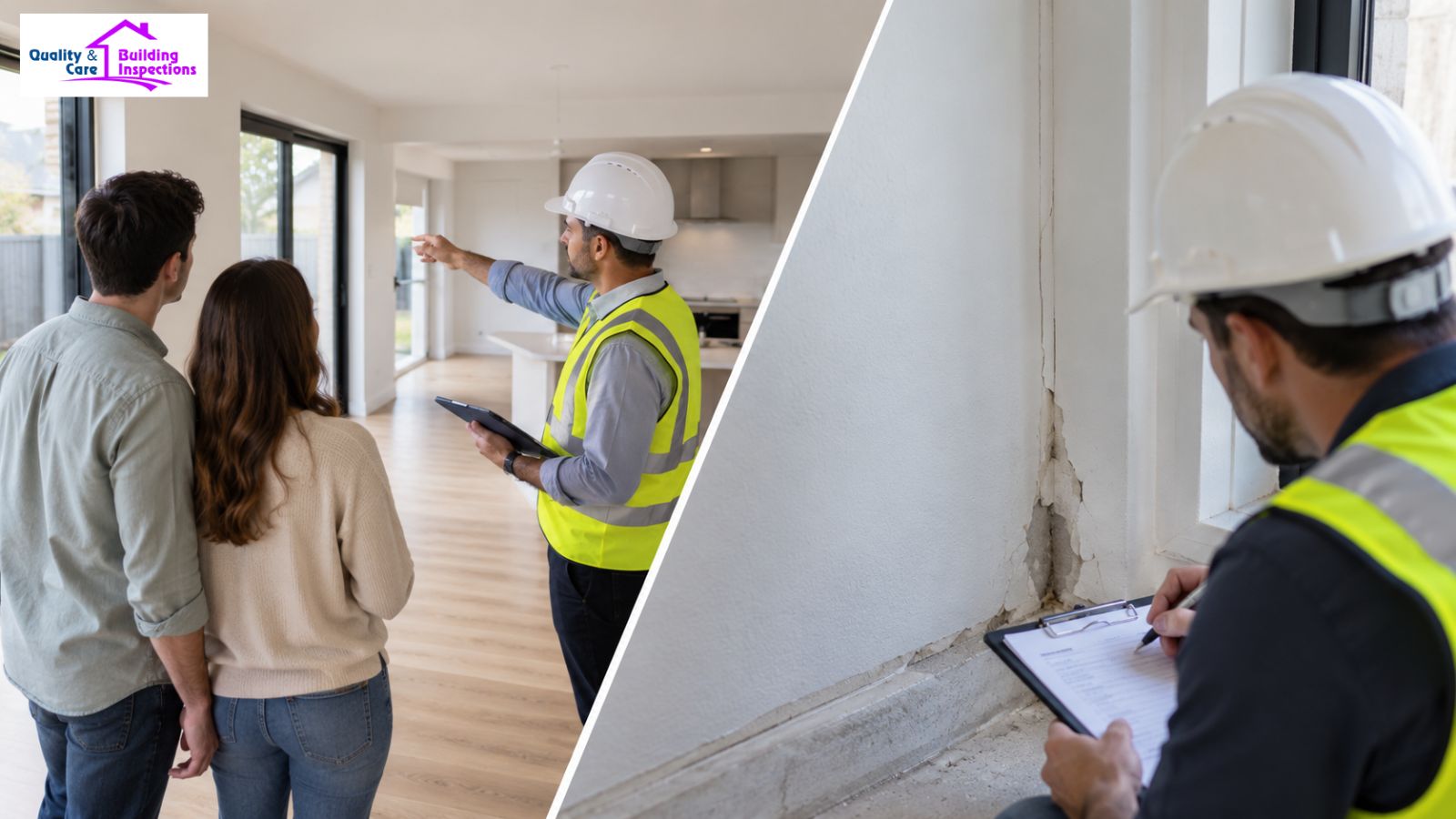
Buying or building a new home is a major investment, and reaching the finishing stage can feel like the moment when everything is finally coming together. However, this is also when careful inspection matters most. A home may look complete at first glance while still containing incomplete work, installation issues, poor finishes, or defects that are easier to address before you formally accept the property.
Understanding handover vs defects inspection Australia homeowners can expect is important because these inspections serve different purposes and may occur at different points in the building process. A thorough Handover Inspection can help identify outstanding issues before handover, while a later defects inspection can uncover problems that become apparent after the property has been completed or occupied.
Knowing the difference can help you choose the right inspection at the right stage and avoid assuming that one inspection automatically covers everything.
A Handover Inspection is generally carried out when a newly constructed home is approaching practical completion and the builder is preparing to hand the property over to the owner. The purpose is to assess the visible condition of the completed work and identify defects, incomplete items, poor workmanship, or areas that may need rectification.
This inspection is particularly valuable because the property is still closely connected to the construction process. Items identified before or around handover may be easier to raise with the builder while trades and contractors are still involved in completing the project.
An experienced inspector does not simply walk through the property looking for obvious damage. They assess the home systematically, considering elements such as finishes, fixtures, doors and windows, walls, ceilings, flooring, wet areas, external areas, visible services, drainage observations, and construction quality.
The exact scope of an inspection depends on the property, inspection agreement, accessibility, construction stage, and limitations of non-invasive inspection methods.
New homes can create a false sense of security because everything appears unused. New does not necessarily mean defect-free. Construction involves multiple trades, materials, installations, tolerances and finishing processes, so mistakes can occur even in recently completed properties.
For example, an inspector may identify a door that does not latch correctly, uneven flooring, damaged cabinetry, incomplete sealant, poorly finished paintwork, water ponding in an external area, missing hardware, or other visible issues.
Individually, some defects may appear minor. Collectively, however, they can indicate that the final quality-control process needs more attention.
A new home inspection should be viewed as part of a broader sequence rather than a single event. Different inspections can provide useful information at different construction milestones, depending on the type of build and the owner’s requirements.
The most useful way to understand new-home inspections is by looking at the major inspection stages involved in a typical construction project.
These may include:
Not every homeowner will require every inspection, and the available inspection stages can vary depending on the construction method and contractual arrangements.
A staged approach is useful because some building elements become inaccessible as construction progresses. Once walls are lined, ceilings are closed, or finishes are installed, certain components can no longer be visually assessed without destructive investigation.
This is one reason experienced building inspectors distinguish between checking a property at one point in time and understanding how inspection timing affects what can actually be observed.
The question of PCI vs defect inspection often causes confusion. The terms can be used differently across builders, inspectors and states, so homeowners should always confirm what a particular inspection includes rather than relying solely on the name.
PCI commonly refers to a practical completion inspection or inspection conducted around the completion and handover stage. It is generally focused on identifying visible defects, incomplete work and items requiring attention before or around handover.
A defects inspection may instead refer to an assessment specifically focused on identifying defects after completion or during a relevant defects liability or warranty period.
The important distinction is not simply the terminology. Timing and purpose are what matter.
A property inspected immediately before handover can have different issues from one inspected several months later. Some defects are obvious when the builder has just completed the work, while others only become noticeable after the home has been occupied, exposed to weather, or used repeatedly.
Consider a newly built bathroom.
During a pre-handover inspection, an inspector might observe damaged grout, incomplete silicone, a poorly aligned door, visible tile damage, or a fixture that has not been properly secured.
After occupation, the homeowner might notice water escaping from a shower area during normal use or discover that water is not draining correctly.
The first inspection provides an opportunity to identify visible completion issues. The later inspection may reveal performance-related problems that could not reasonably be identified before the bathroom was used.
That is why one inspection should not automatically be considered a substitute for every other inspection stage.
A defect inspection focuses on identifying observable problems with the property and documenting them clearly enough for the homeowner to understand what requires attention.
Depending on the inspection scope, defects may involve:
The inspector’s role is not to determine whether a builder will accept responsibility for every item. That can depend on contracts, specifications, tolerances, standards, warranties and applicable legislation.
Instead, the inspection provides an independent record of observable conditions and potential concerns.
One of the biggest misconceptions about new-home inspections is that they are primarily about cosmetic imperfections.
Appearance certainly matters, but construction quality involves much more than whether walls look straight or paint appears even.
An experienced inspection considers how different parts of the building function together. For example, water management around wet areas and external surfaces can be considerably more important than a small cosmetic mark.
Likewise, doors and windows should generally be assessed for operation and visible installation issues rather than simply whether they look attractive.
This broader perspective is particularly important because some defects that seem insignificant can become more expensive if they are ignored.
During an inspection, attention may be given to:
Inspection findings should always be interpreted according to the limitations of the inspection. A visual inspection cannot confirm conditions hidden behind walls, under slabs or beneath fixed finishes unless additional specialised testing is undertaken.
A compliance review and a building defect inspection should not be treated as exactly the same service.
Compliance can involve technical requirements, approved plans, specifications, building legislation, standards, certificates and other documentation. Determining full compliance may require access to information that is not available during a standard visual inspection.
A building inspector may identify an apparent issue that warrants further investigation, but that does not necessarily mean the inspector can certify that the entire building complies with every applicable requirement.
This distinction is important for homeowners because an inspection report should be clear about what was inspected, what was observed and what could not be assessed.
Homeowners should keep copies of:
Good documentation can make it easier to track whether identified items have been addressed and can provide a useful reference if questions arise later.
A builder warranty does not mean homeowners should wait until a problem becomes serious before raising it. Warranty rights, defect periods and builder obligations vary depending on the state or territory, contract and circumstances.
For this reason, homeowners should understand the terms that apply to their individual project and seek appropriate legal or building advice when necessary.
An inspection can nevertheless be useful as an independent record of the property’s condition. Identifying concerns early may give the homeowner more time to communicate with the builder and understand what needs to be rectified.
It is also worth remembering that an inspection report does not itself create a warranty or determine legal responsibility. Its value lies in documenting observable conditions and providing informed technical observations.
This is perhaps the most common misconception. New construction can contain defects, incomplete work and workmanship issues just like older properties can have maintenance concerns.
Some owners wait until they have unpacked and lived in the property for weeks before seriously checking it. While post-handover observations can still be valuable, addressing certain issues before handover may be more straightforward.
Builders generally have their own quality-control processes and contractual obligations. An independent inspection provides a different perspective because the inspector is assessing the property on behalf of the homeowner rather than managing the construction project.
A scratched cupboard door is easy to notice. Less obvious issues involving moisture, drainage, movement or installation quality may deserve greater attention.
Different inspection stages answer different questions. A handover assessment cannot retrospectively reveal every concealed construction issue, and a later defects inspection cannot necessarily recreate conditions that existed before finishes were installed.
Book at the right stage. Ideally, understand what you want the inspection to achieve before choosing the inspection date. Timing affects what can be observed and what can still be rectified.
Provide relevant documentation. Where appropriate, give the inspector access to plans, specifications or other information that helps establish the intended construction outcome.
Attend when practical. Walking through the property with the inspector can help you understand why particular observations matter and what limitations apply.
Ask questions about significant findings. A good inspection report should distinguish between minor cosmetic matters and findings that may warrant further investigation.
Keep the report. Even after defects are rectified, retain the original inspection report and photographs alongside records of completed rectification work.
Do not confuse inspection with legal advice. If a dispute develops with a builder, building consultant, solicitor or other suitably qualified professional may be appropriate depending on the issue.
The answer depends primarily on when your property is being inspected and what you need to establish.
A handover inspection is particularly useful when the home is approaching completion and you want an independent assessment of visible defects, incomplete work and workmanship before or around handover.
A defects inspection may be more appropriate when the property has already been handed over and you want to identify problems that have emerged or become apparent during occupation.
For many homeowners, these inspections are complementary rather than competing options. The most appropriate approach depends on the construction stage, contract, property condition and the homeowner’s concerns.
Understanding handover vs defects inspection Australia homeowners encounter can make the new-home process considerably less confusing. A handover assessment focuses on the condition of the property around completion, while a later defects inspection can identify issues that emerge or become apparent after occupation. Neither should automatically be considered a complete substitute for every other inspection stage.
A carefully timed Handover Inspection can provide an independent perspective on visible workmanship, incomplete items and potential defects before the homeowner moves forward. For homeowners who want a clearer understanding of their property’s condition, Quality & Care Building Inspections can provide independent inspection support focused on practical observations, construction quality and clearly documented findings.
Quality & Care Building Inspections can also help homeowners understand what an inspection can and cannot establish, allowing them to make informed decisions about the appropriate inspection stage for their circumstances. Always consider the requirements of your contract and state or territory before relying on an inspection report for legal, warranty or compliance decisions.
No. Although both can identify defects, their timing and purpose can differ. A Handover Inspection is generally performed around practical completion and handover, focusing on visible defects, incomplete work and workmanship. A later defects inspection may identify issues that emerge after occupation or during a relevant defects or warranty period. The exact scope depends on the inspection agreement and circumstances.
The appropriate timing depends on the type of inspection you require. For a handover assessment, homeowners generally arrange the inspection when construction is substantially complete but before or around formal handover. Earlier staged inspections may also be useful because some structural or construction elements become inaccessible as the build progresses. Your builder’s construction programme and contract should be considered when planning inspection stages.
No inspection can guarantee that every defect will be identified. Standard building inspections are commonly visual and non-invasive, meaning concealed components behind walls, under floors or within other inaccessible areas may not be assessable. A thorough inspector should explain these limitations and identify circumstances where further specialist investigation or testing may be appropriate.
Not necessarily. An inspection report documents observable conditions and provides technical observations, but whether an item must be rectified can depend on the building contract, specifications, applicable tolerances, legislation, standards and warranty arrangements. If there is disagreement about responsibility, homeowners may need advice from an appropriately qualified building professional or legal adviser.
A follow-up inspection can be useful where the original findings were significant or numerous. It allows the homeowner to compare the rectified work with the original observations and identify whether outstanding issues remain. Whether a follow-up inspection is worthwhile depends on the number and seriousness of the defects, the quality of the builder’s rectification work and the homeowner’s circumstances.

Buying a new home may be the biggest investment you will ever make. Although the process is very exciting it can become quite overwhelming. While the home you have fallen in love with may appear to be just what you’re looking for, how can you be sure there aren’t potentially serious issues which can make your investment in your future a costly one?


