

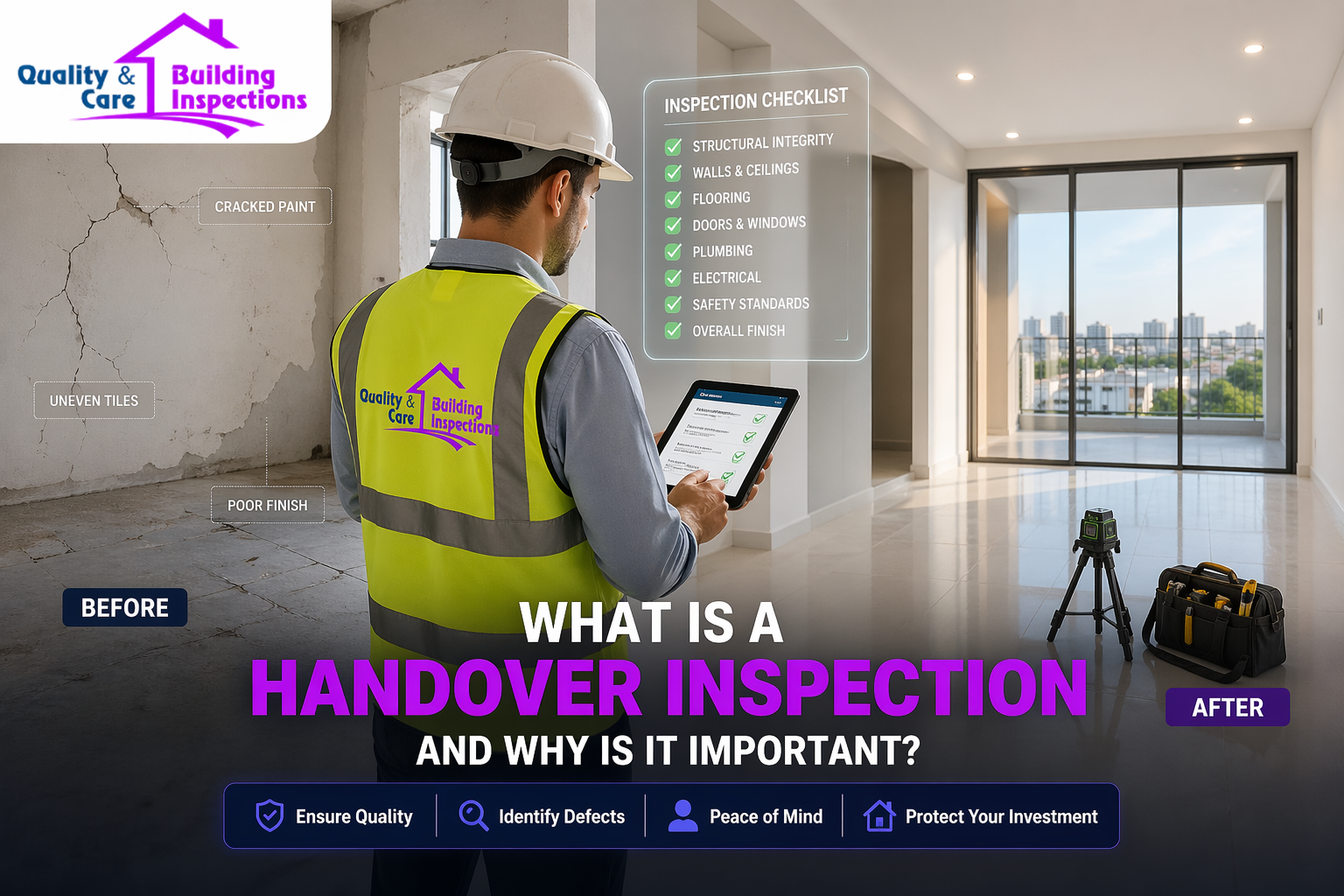
Buying a home or building one is a big deal and it should be really exciting.. The last part just before you get the keys is when a lot of expensive problems can sneak up on you. This is exactly where a handover inspection in Australia becomes critical.
Many people think that a brand new home will be perfect. The truth is, even when everything is done really well there can still be things that were missed. These can be things like a bad paint job or they can be big things like problems, with the foundation of the new home. Without a proper inspection, these problems can become your responsibility after handover.
That’s why professional providers like Quality & Care Building Inspections place strong emphasis on thorough, independent checks before you sign off on your new home.
A handover inspection—also known as a Practical Completion Inspection (PCI)—is the final assessment conducted before the builder officially hands over the property to the owner.
This process ensures that:
A detailed inspection helps homeowners avoid accepting incomplete or substandard work.
A builder quality check is not just a formality—it’s your last opportunity to ensure everything is built correctly. Builders often work under tight timelines. While most aim for quality, small issues can be missed, such as:
Professionals like Quality & Care Building Inspections conduct independent checks, ensuring nothing is overlooked before handover.
A comprehensive new home inspection checklist covers multiple aspects of the property.
A structured checklist ensures consistency and thoroughness during inspections.
A PCI inspection guide helps homeowners understand what happens during the inspection.
Usually arranged when the builder declares the project near completion.
Inspectors examine every accessible area of the property.
All issues—big or small—are documented.
A detailed report is provided for review and builder follow-up.
The builder addresses the identified issues before final handover.
Experts at Quality & Care Building Inspections follow a structured approach to ensure no detail is missed.
A homeowner in Australia decided to skip a professional handover inspection to save time.
After moving in, they discovered:
Fixing these issues later involved:
A proper inspection through Quality & Care Building Inspections could have identified these problems early, saving both time and money.
Even new homes can have defects. Some of the most common include:
These issues may seem minor at first but can lead to bigger problems if ignored.
Preparing for a handover inspection in Australia doesn’t require technical expertise—but awareness helps.
These steps give you more control over the final outcome.
Even new builds can have issues due to human error.
Some defects may go unnoticed without independent inspection.
Skipping it can lead to costly repairs later.
Most professional reports are clear and easy to follow.
From hands-on inspections, certain patterns consistently appear. Small details often reveal larger underlying issues.
Inspectors from Quality & Care Building Inspections focus on these details to ensure nothing critical is missed.
An independent inspection ensures unbiased evaluation.
Builders may overlook minor issues due to time constraints, but a third-party inspection provides:
This builds confidence in the final handover process.
A thorough inspection is not just about immediate fixes—it protects your investment.
Benefits include:
Homeowners who invest in a proper handover inspection often avoid unexpected surprises later.
Selecting the right inspector is crucial.
Look for:
At Quality & Care Building Inspections, we bring structured expertise and practical insight to every inspection.
A handover inspection is your final safeguard before taking ownership of your new home. It ensures that:
With the help of experienced professionals, you gain clarity, confidence, and control during one of the most important stages of homeownership.
Don’t leave one of the most important stages of your home journey to chance. A missed defect today can turn into a costly repair tomorrow—and once you’ve signed off, your options become limited. With Quality & Care Building Inspections, you get a thorough, independent assessment that puts your interests first. Every inspection is carried out with attention to detail, clear reporting, and practical insights you can actually use when dealing with your builder. Whether you’re nearing completion or your builder has already scheduled the handover, now is the right time to act.
Secure your handover inspection in Australia with us and make sure everything is exactly as it should be—before you take the keys.
It’s the final inspection conducted before the builder hands over the property.
When construction is complete but before final payment and handover.
You can, but professional inspectors identify issues that are easy to miss.
Typically 1–3 hours depending on property size.
The builder is required to fix them before final handover.

Buying a new home may be the biggest investment you will ever make. Although the process is very exciting it can become quite overwhelming. While the home you have fallen in love with may appear to be just what you’re looking for, how can you be sure there aren’t potentially serious issues which can make your investment in your future a costly one?


