

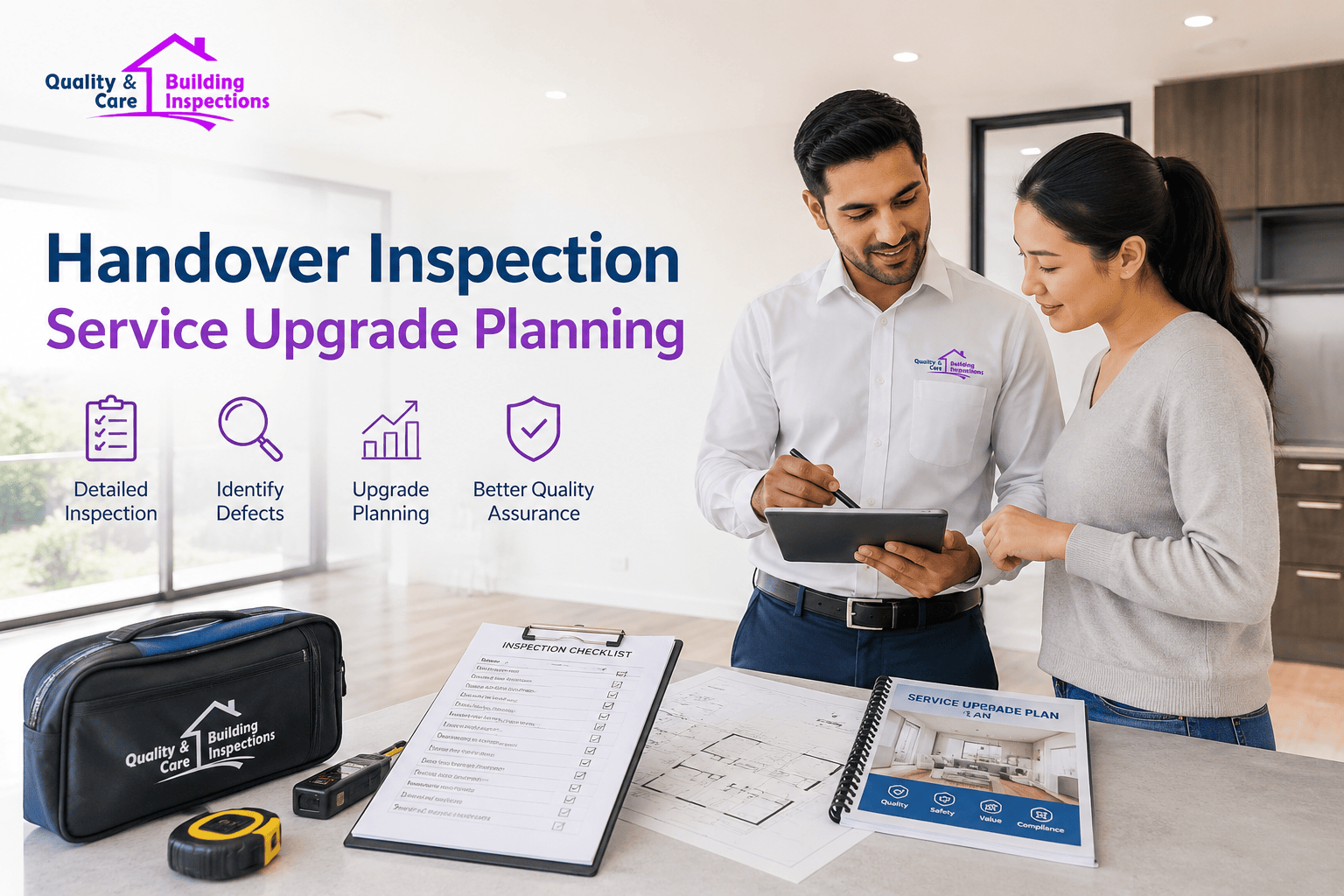
Purchasing a house is undoubtedly one of the largest investments most people can make in their lives. Months of preparation and hard labor are needed for this, but finally comes the moment when buyers will have to check if their property has been finished as agreed before signing documents and getting access to their property. Buyers should know about handover inspection in Australia and the important facts associated with it.
Regardless of whether it is your first purchase or another one among many you own, it is important to know what a residential handover inspection in Australia is. Read this brief explanation of this procedure below and learn how to protect yourself from making mistakes that may cost much.
Home handover inspection in Australia is an essential part of buying your dream house. Usually, it is called a practical completion inspection or PCI. This is when homeowners hire an independent inspector to perform an assessment of the condition of a house and make sure there are no serious issues left after its completion. Such an inspection can be done only when builders consider the construction work completed.
The handover inspection gives you one last chance to note any problems with the house prior to taking possession of the property. It might be harder to get things fixed once the payments have been completed and the ownership rights are transferred.
Here are some of the major reasons for undertaking a handover inspection:
It is customary that builders fix all defects noted during practical completion stages. A professional inspection will reveal some of these defects, which could prove costly later on.
They may include:
A builder’s quality check guarantees that the house constructed meets the required quality standards of construction. Reputable builders can overlook defects during very busy construction phases.
When building a new house, the completed project should meet certain criteria as specified in the building contract.
Defects that come up during the inspection are documented on a defect report. The list forms the foundation upon which builders will be expected to make rectifications either prior to or immediately after handover.
While many homeowners have heard about PCI before, most do not know its meaning. PCI refers to Practical Completion Inspection. The PCI inspection guide covers the areas that the inspector will assess when analyzing a new structure. This is aimed at determining whether the house can practically be said to be completed.
What is covered in a PCI inspection:
Adherence to a professional inspection guide makes sure nothing important is overlooked.
A detailed new home inspection checklist makes sure every aspect of your new home gets inspected properly.
| Exterior Inspection | Interior Inspection | Kitchen Assessment | Bathroom Inspection | Electrical Systems | Plumbing Systems |
| Bricks/cladding work Condition of the roof Gutters/downpipes Driveway/pathway FencesExterior paintworksDrainage works | Wall finishes Condition of the ceiling Consistency of paint works Flooring works Alignment of tiles Skirting boards Staircases Operation of doors Working of windows Kitchen inspection | Cabinet installationBench-top conditionAppliance installationSplashback qualitySink operationPlumbing connections | Waterproof qualityShower screensTapware installationDrainage performanceTile finishesVentilation systems | Light switchesPower outletsSmoke alarmsCeiling fansElectrical safety compliance | Water pressureHot water systemsPipe connectionsDrainage functionalityLeak detection |
Using a detailed new home inspection checklist helps identify both cosmetic and functional issues before handover.
Many home buyers are surprised by the number of problems found during the residential handover inspection process in Australia.
These are among the most common defects:
| Cosmetic Problems | Structural Problems | Mechanical Problems | Incomplete Construction |
| Drips in paint Walls scratches Damaged cabinets Chipped tiles Imperfect floor | Cracks in the wall Improperly installed fixtures Misaligned bricks Waterproofing failure | Faulty appliances Plumbing leaks Electrical failures Improper ventilation | Incomplete fixtures Landscape work incomplete Sealing not doneMissing hardware |
Any defect, regardless of how small it is, will negatively impact the property value.
Homeowners can easily perform the handover inspection, but a professional inspector is always recommended. A professional building inspector has experience in identifying problems associated with the building structure, and he knows about the Australian standards for residential buildings.
Professional inspections often identify problems that would otherwise be unnoticed by an inexperienced buyer.
When the builder is satisfied that the construction is practically completed, it is the perfect time to perform an inspection. A builder quality check is needed when the builder declares practical completion, but before final settlement and handing over of possession.
It will give you enough time to:
Do not rush with the handover process just because the builder wants to finish the job.
Once you are done with the inspection, you will receive a report of the defects found in the inspection. Normally, the responsibility of rectification lies on the shoulders of the builder, either before completing the work or during the agreed defects liability period. After completing the rectification process, another inspection might be done to confirm everything.
It is important to know what a handover inspection is in Australia, especially for those constructing a new house. The inspection will help ensure that you have a property worth living in before receiving the keys. With the help of a new house inspection checklist, PCI inspection guide, and builder quality check, your investment will be secured from future troubles. For a quick inspection at your home, you can take help from Quality and Care, which can offer you the best solutions and many relevant services.
FAQS
1. What is a handover inspection in Australia?
A handover inspection is an inspection carried out on newly constructed property before the transfer of the house from the builder to the homeowner.
2. Why is a handover inspection necessary?
It assists in recognizing any defects, unfinished work, or any issues in the workmanship before the completion of payments.
3. What are the components of a new home inspection list?
A new home inspection list includes aspects such as the structural, interior, exterior, electrical installations, plumbing, appliances, fixtures, fittings, and finishing.
4. What does PCI mean?
PCI is an abbreviation for Practical Completion Inspection, carried out by a builder to show that a home is completed.
5. Do I need to pay for a professional inspector?
Yes. A professional will ensure that the home is done according to the required standard.

Buying a new home may be the biggest investment you will ever make. Although the process is very exciting it can become quite overwhelming. While the home you have fallen in love with may appear to be just what you’re looking for, how can you be sure there aren’t potentially serious issues which can make your investment in your future a costly one?


